Collector’s Helper - Coin Lens
- 4.2
- Rating
- 100.00K
- Installs
- Free
- Price

 Analysis by App-foxy
I approached Collector’s Helper - Coin Lens as a practical tool rather than a novelty app. Its purpose is straightforward: help me identify coins from different parts of the world and learn more about what I am holding. That makes it most interesting when a coin is unfamiliar, poorly labeled, or pulled from an old family collection. In my experience, the app works best as a first stop for curiosity and organization, not as a final authority for valuation or authentication.
The app sits in the finance category, although it feels closer to a pocket reference guide for collectors. It is developed by Mor Tosbaa Mobile and is available free of charge, with optional in-app purchases ranging from $4.99 to $29.99 per item. It is rated for Everyone, so the presentation is approachable enough for a child exploring a coin jar, a casual collector sorting inherited pieces, or someone who simply wants to understand foreign currency encountered while traveling.
How Collector’s Helper - Coin Lens fits into real coin collecting
The most useful way to think about this app is as a bridge between seeing a coin and knowing what to investigate next. A coin may show a portrait, a date, a small symbol, and lettering I cannot read. Searching each clue separately can be slow and often leads to unrelated results. A dedicated coin-identification app gives that first investigation a clearer starting point.
You May Also Like

 Google Keep - Notes and lists
Google Keep’s Quiet Growth Shows the Appeal of Simpler Notes
As mobile work gets busier, Google Keep keeps winning a simple contest: capture a thought quickly, find it later, and get on with the day.

 Blood Strike: 2.5 Anniversary
Blood Strike’s Loadouts Turn Every Drop Into a Tactical Gamble
A close look at Blood Strike’s custom loadouts: how fast access to signature weapons reshapes its battle royale rhythm, rewards preparation, and narrows the gap between fights.

 Pandora - Music & Podcasts
Pandora’s Music Is Easy to Start, but Harder to Recover
Pandora’s strength is its low-effort path from a seed to a station. Its weak spot is how much confidence it asks you to place in connection, setup, and quiet recovery.

 8 Ball Pool
 Is Built on Rivalries, Rematches, and Routine
A close look at the rivalries, rematches, shared routines, and unanswered safety questions that turn a quick pool match into a persistent mobile community.

 Samsung Music
’s Quiet Strength Is Playing What You Already Own
Its reach comes less from spectacle than from dependable access to a personal library. That simplicity is both the app’s strongest retention engine and its ceiling.

 AccuWeather: Weather Radar
AccuWeather Review: A Quick, Clear Forecast for Everyday Decisions
For everyday plans, the best forecast is the one you can understand quickly. AccuWeather makes rain timing, radar, and local conditions easy to act on, with a few trade-offs.
More From Our News Desk



I found the concept especially appealing for mixed collections. If several coins have been stored together without notes, the app can help separate them by country, design, or historical context. That does not replace careful cataloging, but it can turn an intimidating pile into a manageable set of questions: What country issued this? What denomination is shown? Is the date readable? Does the design match other examples?
The store summary presents it as an app for identifying and learning about coins worldwide, and that description captures its central value without making it sound like a full professional catalog. The experience is aimed at recognition and learning. Anyone expecting an auction-grade appraisal system should adjust expectations before relying on the results.
The strongest part is the first identification step
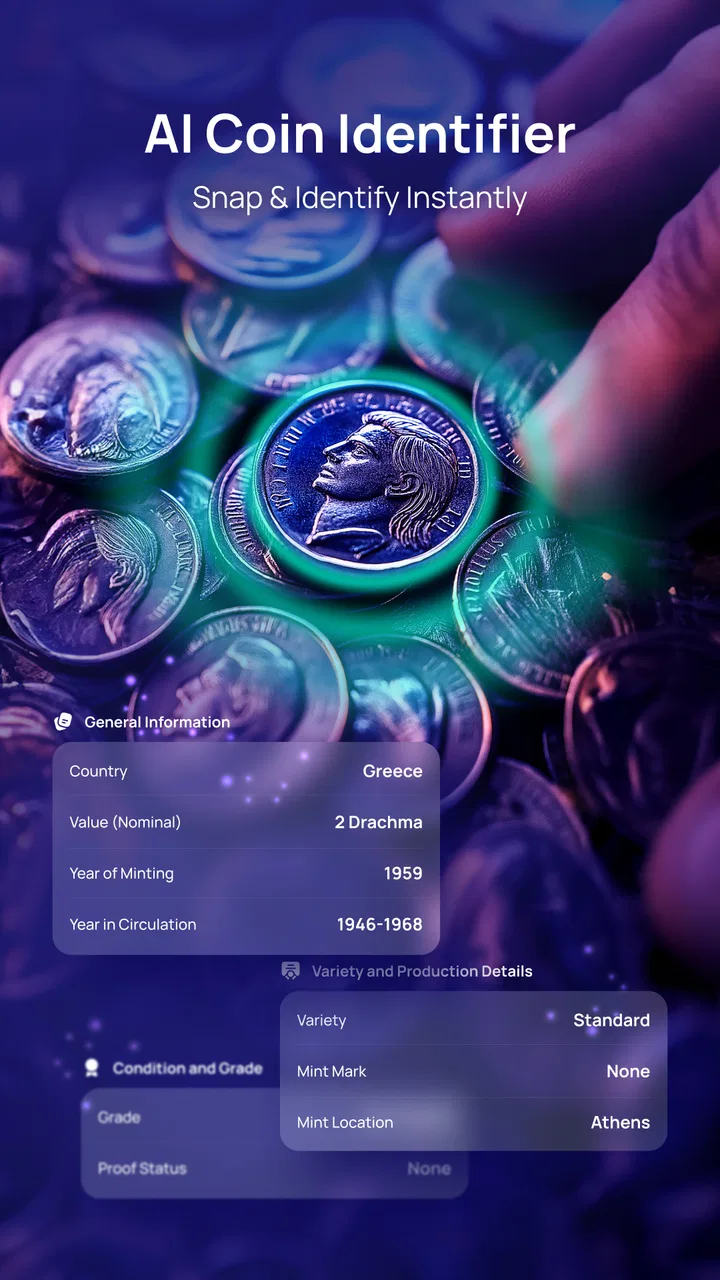
When I use a camera-based coin tool, my priority is not a perfect answer on the first attempt. I want a useful lead. That lead might be a likely country, a denomination, or a design family that tells me what to examine next. This is where a tool like Coin Lens can save time compared with manually browsing broad image searches.
A good workflow is to begin with the clearest side of the coin, keep the entire edge visible, and make sure the date and lettering are not hidden by glare. If the initial result seems uncertain, I would rotate the coin, capture the reverse, and compare the two sides rather than immediately accepting the first suggestion. That small habit is more important than it sounds because similar portraits and symbols can appear across different issues.
Another useful approach is to clean the viewing area, not the coin. I would place the piece on a plain surface and improve the light before taking a new image. Aggressively polishing an old coin can damage its surface and reduce its collector interest, so identification should never be treated as a reason to scrub away patina. The app is more valuable when it encourages observation instead of careless restoration.
For a family collection, I would use the app in batches. First, I would photograph or inspect the pieces that have the most readable dates and lettering. Those create reference points for less obvious coins. Then I would group similar designs and check whether the apparent matches are consistent. This makes the tool part of a repeatable process rather than a series of disconnected scans.
Learning value matters more than a quick label
The app’s educational side is important because coin collecting is not only about naming objects. A denomination can look familiar while belonging to a completely different currency system. A portrait may represent a ruler, a national figure, or a symbolic design. Even a small mint mark or unusual script can change the direction of research.
I like using an identification result as a prompt for closer inspection. Once I have a likely origin, I can look again at the date format, language, symbols, and metal color. That second look often teaches more than the initial recognition itself. It also helps me notice when a result does not fit the physical coin.
This is one of the app’s less obvious strengths: it can make beginners more attentive. A person who starts by asking “What coin is this?” may soon begin asking “Why is this portrait here?” or “Why does this issue use that script?” For children, that can turn an ordinary jar of change into a small geography and history exercise without requiring a complicated specialist database.
Where it should not be mistaken for an appraisal service
The biggest limitation is the gap between identification and value. Knowing a coin’s likely country and denomination does not tell me what a particular example is worth. Condition, rarity, mint errors, authenticity, demand, and local market conditions can all matter. Two coins that look similar in a quick scan may have very different prices once those details are examined.
I would therefore avoid using the app as the sole basis for selling, insuring, or dividing an estate. If a result points to a potentially unusual coin, the sensible next step is to compare it with a reputable reference and ask a qualified dealer or specialist for an opinion. The app can help me explain what I have found, but it should not be treated as a certificate of authenticity.
Condition is another area where camera-based recognition has natural limits. Scratches, corrosion, weak strikes, dirt, reflections, and worn lettering can make a coin resemble several possibilities. A very old or damaged piece may produce a broad lead rather than a confident identification. That is not necessarily a failure of the app; it is a reminder that the physical evidence is incomplete.
I also would not expect it to replace a dedicated collection-management system. People who need purchase records, insurance documentation, detailed grading notes, inventory exports, or advanced valuation tracking may prefer a specialist cataloging platform. Coin Lens is more useful at the discovery stage, when I am trying to understand an object before deciding how deeply to document it.
Practical friction and the cost question
The free entry point makes it easy to try the app with a handful of coins before deciding whether it belongs in a regular workflow. That matters for casual users who may only encounter unfamiliar currency occasionally. At the same time, the presence of optional purchases means I would check which parts of the experience require payment before building my entire collection process around it. The purchase range extends from $4.99 to $29.99 per item, so the value depends heavily on how often I expect to use the additional capabilities.
For someone identifying one inherited box, a paid option may be reasonable if it saves substantial research time. For a person who only wants to identify a single foreign coin found in a drawer, paying for more than the basic experience may not make sense. I would start with a small test: use several coins with different levels of wear, see whether the results are useful, and then decide whether the app earns a place in a long-term routine.
The current version is 1.6, which suggests an app that is still relatively early in its development rather than a decades-old reference institution. I see that as a reason to keep expectations practical. The core idea can already be useful, but collectors who depend on deep archival coverage or highly specialized attribution should keep another reference source nearby.
A realistic everyday scenario
Imagine finding a small envelope of coins while clearing out a relative’s desk. Some are familiar, but several use unfamiliar lettering and one has a worn portrait. I would lay them out without cleaning them, separate the obvious duplicates, and use the clearest coin first. After getting a likely country or denomination, I would examine the date and symbols on the remaining pieces and compare their designs.
Next, I would make a simple written note for each item: the identification suggested by the app, the visible date, the condition, and anything unusual. If two coins appear similar but differ in a tiny mark, I would keep them separate instead of assuming they are identical. Finally, I would research the most promising pieces through a collector reference or specialist. In that scenario, the app does not finish the job, but it makes the first hour far more organized.
That workflow also reduces a common beginner mistake: assigning value before establishing identity. A coin that looks old may be common, while a less dramatic piece may deserve closer attention because of its issue or condition. Starting with identification keeps the process grounded.
Who will get the most from it?
I would recommend this app to new collectors, families sorting inherited coins, travelers who return with unfamiliar currency, and hobbyists who want a convenient recognition aid. It is particularly suitable for people who do not yet know the vocabulary of numismatics. The app can give them a sensible entry point without forcing them to learn catalog systems before they can ask basic questions.
It may also suit educators and parents looking for a simple activity built around geography, history, and visual details. A child can choose a coin, try to identify it, and then investigate the country or symbols connected with it. Adult supervision is still useful when handling valuable or fragile pieces, but the Everyone rating makes the general concept accessible to a broad audience.
I would be more cautious about recommending it to advanced collectors who already use specialized catalogs and need precise variety attribution. If your work depends on distinguishing minor die differences, documenting provenance, or estimating a high-value purchase, a general identification tool is not enough. In that situation, Coin Lens can still serve as a quick cross-check, but it should not become the main reference.
How it compares with the usual alternatives
The traditional alternative is manual research through books, collector forums, image searches, and dealer catalogs. Those sources can be deeper, especially for rare varieties, but they demand more knowledge and patience. The app’s advantage is speed at the beginning of the process. Instead of searching vague descriptions, I can start with a visual clue and then use more focused research.
General image-search tools are flexible, but they often return visually similar objects without explaining why they match. A coin-specific app has a clearer purpose, which can make the investigation less scattered. On the other hand, a specialist catalog remains stronger when I need exact issue details, grading standards, or market context.
Collection-management apps solve a different problem. They are better for maintaining an inventory after identification, while Coin Lens is more useful when the identity is still uncertain. I would happily use both types together: identify and learn first, then record the confirmed information in a structured collection system.
What I would do before trusting a result
I would treat every result as a hypothesis and look for three matching clues: the overall design, the lettering or script, and the date or denomination. If only the picture looks similar but the text does not fit, I would scan again and investigate further. This simple check prevents a quick visual match from becoming an incorrect catalog entry.
I would also keep the original coin available for comparison instead of relying only on a saved label. Photographing both sides under even lighting can help when asking another collector for advice later. For potentially valuable pieces, I would avoid altering the surface and would seek an independent opinion before making a financial decision.
These habits reveal the app’s proper role. It is strongest when it shortens the distance between curiosity and informed research. It is weakest when a user expects one scan to settle identity, condition, authenticity, and price at the same time.
My final view
After looking at the app as both a beginner-friendly guide and a collector’s utility, I see a clear strength: it makes the first stage of coin research less intimidating. The combination of visual identification and learning is more useful than a simple label because it encourages me to inspect the object and ask better questions.
There are sensible reasons to remain cautious. Worn or unusual coins may need manual research, identification is not the same as valuation, and optional purchases deserve consideration before regular use. Those limitations do not cancel out the app’s usefulness; they define it.
My recommendation is simple: use Collector’s Helper - Coin Lens as a fast, approachable starting point, then verify important conclusions elsewhere. It is a good fit for casual discovery, family collections, and new hobbyists who want help making sense of unfamiliar coins. I would skip it as a standalone solution if I needed professional grading, detailed inventory management, or dependable pricing for valuable pieces. With that distinction in mind, it offers a practical way to turn an unknown coin into an informed next step.
Mor Tosbaa Mobile has positioned the app around a genuinely useful everyday question: “What am I looking at?” For many users, answering that question is exactly where the enjoyment of collecting begins. The app’s average rating is 4.2 from around 1.2 thousand ratings, and it has passed 100 thousand installs, which fits its appeal as an accessible tool rather than a narrowly specialized professional system.
FAQs for Collector’s Helper - Coin Lens
01What is Collector’s Helper - Coin Lens, and what does it do?
Collector’s Helper - Coin Lens is designed to help users examine and organize coins using their phone’s camera. You can photograph a coin and receive visual assistance with identifying its possible country, denomination, year, or design. It is especially useful for beginners who want quick information while sorting a collection, although results should be treated as guidance rather than a guaranteed professional appraisal.
02How accurate is the coin recognition feature?
Recognition quality depends heavily on the coin’s condition, lighting, camera focus, and how clearly both sides are photographed. Clean, well-positioned images usually produce better suggestions, while worn, damaged, rare, or unusual coins may be difficult to identify correctly. Before relying on any result, compare the information with a trusted catalog, collector community, or qualified numismatist.
03Can Collector’s Helper - Coin Lens tell me how much my coins are worth?
The app may provide useful identification details that help you research a coin’s potential value, but users should not assume that an estimated price is a confirmed market valuation. Coin prices vary according to rarity, mint errors, condition, demand, authenticity, and current sales. For valuable pieces, obtain an independent appraisal and compare completed auction results rather than relying on one digital tool.
04Does the app require an internet connection or access to my camera?
Because the app uses camera-based scanning, it normally needs permission to access your device’s camera. Some features may also depend on an internet connection if images or recognition data are processed online, while other functions could remain available offline. Review the permission requests and privacy information before use, and avoid granting access that is not necessary for the features you intend to use.
05Is Collector’s Helper - Coin Lens suitable for serious collectors?
The app can be a convenient companion for quickly sorting coins, recording discoveries, and getting preliminary identification ideas, particularly when traveling or examining an unfamiliar collection. However, experienced collectors should use it alongside established references, specialized databases, and professional expertise. It should not replace authentication services, detailed grading standards, or a specialist’s opinion when a coin may have significant financial or historical value.
Pros
- Quickly identifies many coins using the phone camera.
- Useful reference details help compare possible coin values.
- Clean interface makes scanning simple for beginners.
- Handy for organizing and reviewing a personal coin collection.
- Saves time compared with searching coin details manually.
Cons
- Recognition accuracy can drop with worn
- dirty
- or poorly lit coins.
- Estimated values may differ from current market or auction prices.
- Some features may require an internet connection to work properly.
- Camera permissions are necessary
- which may concern privacy-conscious users.
- Rare or regional coins may not be recognized consistently.

Collector’s Helper - Coin Lens
Gallery